Wood Craft Part 1

Summer is here, along with warmer nights. One of the things to learn about woods lore is that you can actually tell the temperature in the backwoods by paying attention to the insects and a couple of amphibians that live out there.
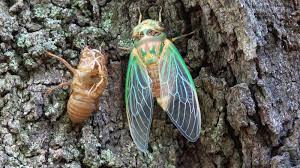
The first to pay attention to is the cicada. These insects live underground as a lymph, but emerge to become adults about every 13 to 17 years. These insects “sing” at daytime temperatures starting at 72 - 75*F. They drop off at 95*F and above.
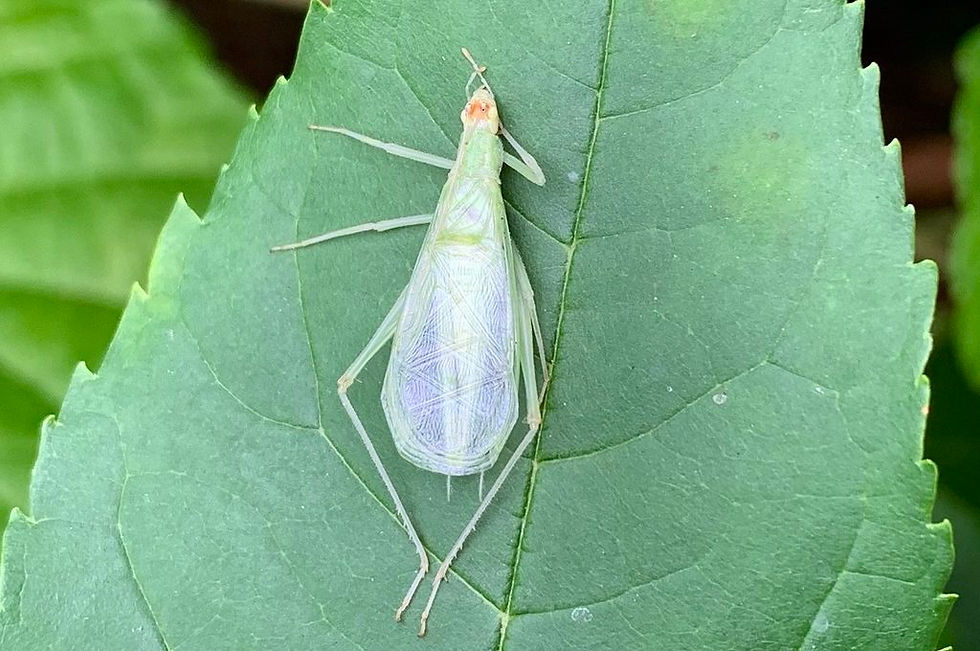
Primarily nocturnal is the tree cricket. These insects are often called the temperature bug. These insects actually “sing” based on the temperature. Dolbear’s Law is an actual mathematical formula that shows how to tell temperatures by counting the number of chirps in approximately 15 seconds, then adding the number 40. In other words — if you count 30 chirps in 15 seconds and add 40, the temperature is at least 70*F.
Standard field crickets are not as accurate at telling the temperature.
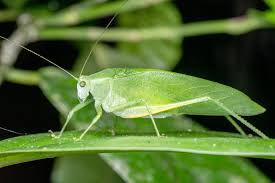
Katydids are another forecasters of temperature. The sounds they make will give you an idea of how hot it is at night.
~ 90° F: Rapid and aggressive calls sounding like "ka-ty-did-n't".
~ 80° F: The standard, rhythmic "ka-ty-did" call.
~ 70° F: A slower, more staggered "ka-ty... she-did".
A bit more scientific way of using them to calculate temperature is to….
Listen: Pick out one specific, singing male katydid.
Count: Use a stopwatch and count every chirp it makes in exactly 60 seconds.
Calculate: Take that number and subtract 19.
Divide and Add: Divide that result by 3, and then add 60.
The reason this works is because these insects are cold blooded and as the temperature rises they make a faster sound, and they slow down that sound as the temperature drops. Generally speaking, the insects begin when temperatures start at about 55*F, and tapers off around 95*F.

The Eastern Gray Frog is another good indicator of temperature. They start calling later than spring peepers—usually in mid-to-late spring—and prefer evening temperatures consistently above 64°F. The warmer it gets, the shorter and faster their trill becomes. If you hear a rapid, almost desperate bird-like chatter, you are experiencing an evening where the temperature is pushing into the upper 70s or 80s. If the call sounds sluggish or drawn out, the air is likely on the cooler side.
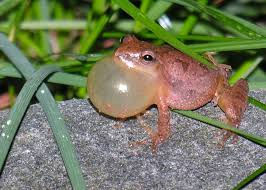
And now we come to the Spring Peeper Frog. Peepers become noticeably active and will start their choruses when the air is above 40°F, ideally around 45°F and higher. Because peepers speed up their calls as the mercury rises, a UC Davis study found you can estimate temperature from the tempo. When the air is cool (between 35°F and 50°F), they are slow and steady. When the temperature jumps into the 60s and 70s, their choruses become significantly faster and nearly overlapping.
Not only can you use the sounds of these insects and amphibians to calculate the temperature, but they make great early warning systems. If you are ever out in the woods camping at night and the sounds go silent, this is a good indicator that a large animal such as a bear or even a moose is prowling nearby.


Comments